

In Her Nature is a year long exploration into the healing power of the natural world. Season by season, setting out to awaken the spirit, and rekindle joy. The weekly journal of a neighborhood, its plants and birds and creatures – and how they are helping repair a heart and rebirth a soul.
The sandhill cranes appeared while I was riding this morning, their voices reaching me before I could see them. I stopped, my horse stopping with me, both of us arrested by that ancient sound. They were flying so high, fifty birds, maybe more, that I couldn’t see them until the sun caught their wings and turned them briefly luminous. Their calls tumbled down through the cold air, and I felt my chest open with something I’ve come to recognize as my body’s response to grace.
This is what a year of paying attention has taught me: gratitude isn’t something we summon once annually around a laden table. It’s a muscle we strengthen through daily practice, through choosing again and again to notice what’s here, what’s generous, what’s still singing despite everything.
Later, when I filled the bird bath, I had to break through a quarter-inch film of ice. The surface shattered into geometric pieces that melted back into themselves. Within minutes, scores of birds arrived – juncos, chickadees, finches, bluejays. Each one drinking as if they’d been searching all morning. I stood watching them, these small bodies working so hard to survive the season, and felt grateful for the simplest things: water, the ability to provide it, the front-row seat to their thirst being quenched.
Since moving to America, Thanksgiving has become my favorite of all the holidays. The gathering, the food, the permission to say out loud what we often keep quiet: thank you, I see you, you matter to me. But lately I’ve been wondering how gratitude became something we practice on a single day, as if it’s something we can check off a list rather than a way of inhabiting our lives. As if one day of thanks could possibly contain the magnitude of what we’ve been given.
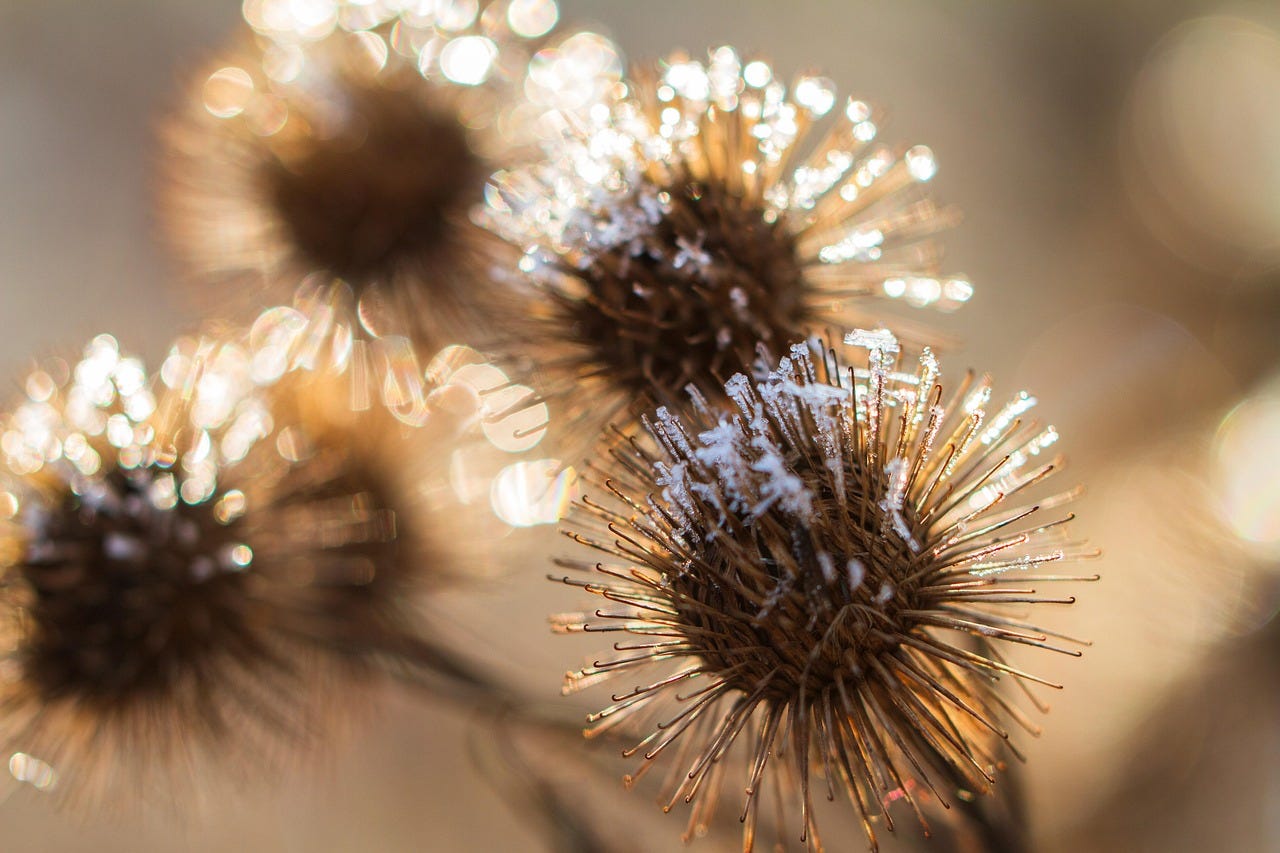
This year, through my writing and the practice of weekly observation, I’ve learned that gratitude starts with paying attention. We can’t be thankful for what we haven’t truly seen or experienced. It’s about watching the alpenglow paint the foothills in shades of rose and amber. It’s about feeling my horse’s steady heartbeat beneath me during a quiet ride. It’s about standing at my bee hives and recognizing the hum of thousands of bees as a form of conversation. It’s about the unexpected sighting of a fox at dusk, or the way ice forms patterns on the water, or the first snow dusting the peaks while the valley stays green.
Gratitude, I’m learning, is the practice of allowing ourselves to be astonished by what’s already here. Not just the beautiful parts, but all of it.
The key word there is ‘allowing.’ This practice isn’t about forcing ourselves to feel thankful when life is genuinely hard. It’s not about silver linings or forced cheerfulness. Life tests us constantly. Not always with tragedy, but with small daily choices about how we’ll respond to discomfort, to inconvenience, to the things that ask something of us.
My greyhound Finnbar demands his morning walk every single day. Rain, snow, shine, or freezing wind. Some mornings I’d rather stay inside where it’s warm, but there he is, wrapped in his coat, insistent and eager, entirely unbothered by the cold. And when we step outside, his joy is immediate, ears back, tail up, pure delight at being out and moving. Watching him transforms the walk for me. Somewhere in that honest acknowledgment of my own resistance, there’s also room to notice: the way frost clings to dried grasses, the absolute silence of a snow-muffled morning, the gift of witnessing his happiness, the companionship of a creature who teaches me daily about showing up regardless of conditions.
True gratitude doesn’t require us to be grateful for everything. It asks us to remain present to everything, including what’s hard, and to notice what else exists alongside the difficulty. Winter is genuinely harsh. And winter also offers its own stark beauty, its lessons about endurance, its invitation to slow down. Both things are true. Gratitude is the practice of staying awake to the fullness of what is, not just the parts we wish were different.
This kind of gratitude changes how we approach our lives. We learn to receive the gifts we’re given – the people we love, the land that holds us, the moments of unexpected beauty. All with honesty about what they ask of us. We say thank you not as a formality but as a recognition of having received something we didn’t earn and can’t repay, something that includes both grace and effort.
This practice of weekly writing has become my way of cultivating gratitude. The discipline of returning again and again to the earth, to observation, to the work of finding words, creates a deepening. There’s something about committing to show up weekly, about choosing to witness and then articulate what I’ve witnessed, that opens me to what I might otherwise miss. My horse Atlas, growing older now, has taught me about impermanence and the tenderness required when strength begins to fade. The bees have shown me how nothing exists in isolation, how every action ripples through systems larger than we can see. The elk moving through the foothills remind me what wildness looks like, just magnificently themselves. Each one a teacher, but only because I’ve been willing to listen.
On this Thanksgiving, I find myself thinking about what paying attention actually reveals beyond beauty, it also reveals complexity. Today is a day I love, and it’s also a National Day of Mourning for Indigenous peoples, acknowledging the loss and displacement that created the conditions for many of us to be here. The Arapaho, Cheyenne, and Ute peoples are the original stewards of this land I love in Colorado. Their relationship with these mountains goes back thousands of years. Their gratitude practices, their ceremonies, their knowing of how to live in reciprocity, these far surpass what I’ve been learning in my small way. This is what honest attention asks: that we see the whole picture, hold multiple truths, live with both gratitude and awareness of all that it required.
As I write this final November essay, what I’m most grateful for is this year of moments I could never have predicted. Mornings when light painted the foothills in colors I didn’t know existed. Evenings when coyotes sang so near to the house that I could distinguish individual voices. The day a golden eagle perched on my house, so close I could see every detail of its fierce beauty, reminding me I’m always in the presence of the wild. Each moment an invitation to gratitude, each observation a reminder that I’m surrounded by abundance.
The sandhill cranes I watched this morning are far south by now, following routes encoded in their bones, trusting what they know. May we all learn to trust our own capacity for gratitude that deeply. Not just for today, but every day. Not just in celebration, but in acknowledgment of all that makes our lives possible. Not just in receiving, but in the commitment to tend and protect and honor what we’ve been given.
Thank you for following these essays, for joining me in this practice of paying attention this year. Thank you to the land and all its creatures for teaching me, week after week, how to see more clearly, feel more deeply, and live with greater gratitude for the astonishing gift of being here.
—> What moments of natural wonder caught your attention this week? Please share your stories and photos in the comments below. Let’s experience nature’s gifts together.
As always, thank you so much for reading and supporting me.
Love,
Jane
Love to you, Jane and a poem
Famous
By Naomi Shihab Nye
The river is famous to the fish.
The loud voice is famous to silence,
which knew it would inherit the earth
before anybody said so.
The cat sleeping on the fence is famous to the birds
watching him from the birdhouse.
The tear is famous, briefly, to the cheek.
The idea you carry close to your bosom
is famous to your bosom.
The boot is famous to the earth,
more famous than the dress shoe,
which is famous only to floors.
The bent photograph is famous to the one who carries it
and not at all famous to the one who is pictured.
I want to be famous to shuffling men
who smile while crossing streets,
sticky children in grocery lines,
famous as the one who smiled back.
I want to be famous in the way a pulley is famous,
or a buttonhole, not because it did anything spectacular,
but because it never forgot what it could do.
Love, love, love, Emily
Gorgeous description of gratitude ♥️🙏🏻